
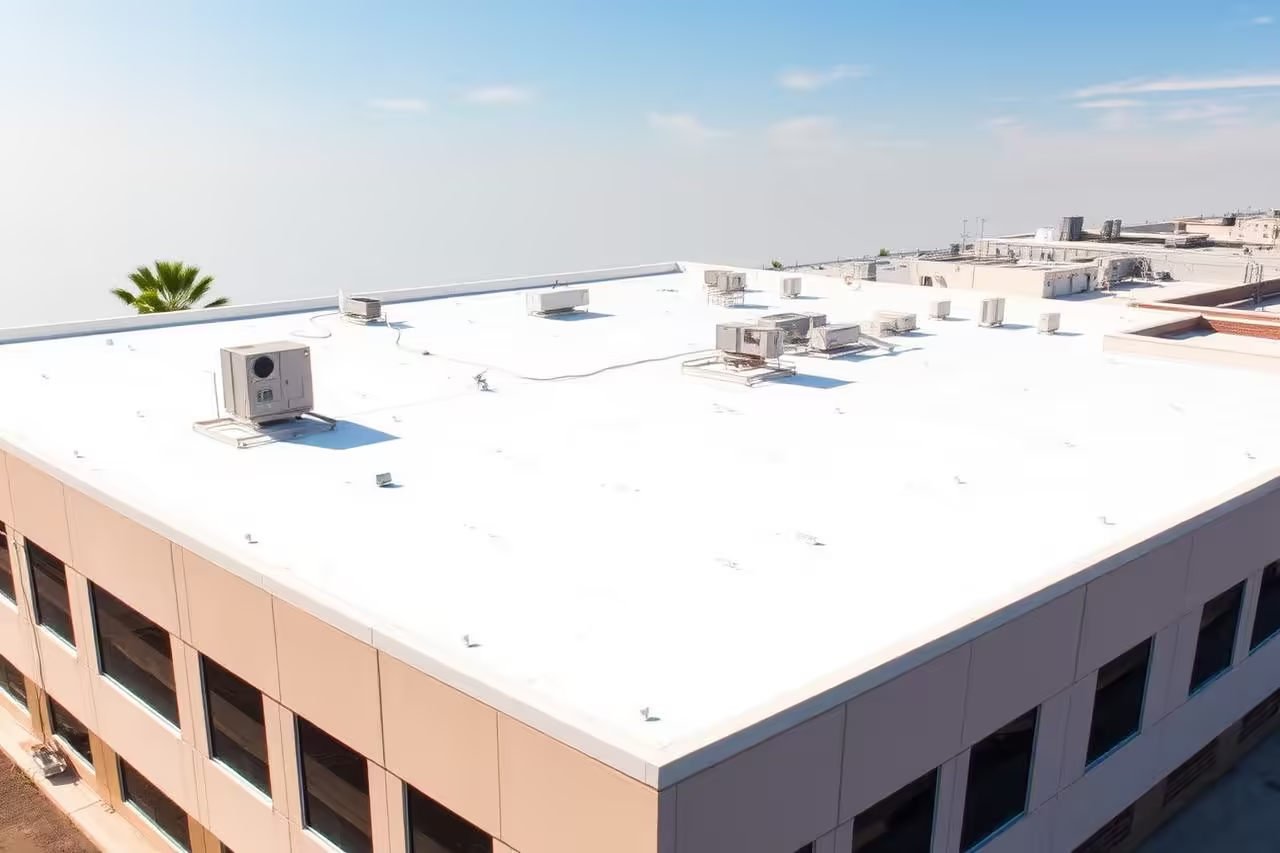
Master Reference · Updated For Arizona Commercial Roofs
Commercial Roof Coating Guides
The master coating reference for every roof system in this Resource Center: which coating type belongs on which membrane, and how often it actually needs to be reapplied in our climate.

One Reference For Every Roof System
Coating is the single most important maintenance task across every roof system in this Resource Center, but the right coating, and how often to apply it, varies enormously by membrane type.
This page is the master reference. Use it to understand the two main coating types and to look up recoat frequency by roof system, then visit the full system guide for complete application steps.
Coating Type & Recoat Frequency
Filter by roof system to see what gets coated, with what, and on what interval.
| Roof System | Coating Type | Recoat Frequency | Notes |
|---|---|---|---|
| TPO (heat-welded membrane) | Flashing and seams only, acrylic or silicone | 1 to 2 years | The membrane face itself rarely needs a full coating |
| EPDM | Flashing and seams (rarely the full field) | 1 to 2 years (flashing) | Low permeability means minimal coating need on the field |
| Modified Bitumen | Full surface, acrylic or elastomeric | 9 to 12 months exterior / 12 to 18 months in shaded areas | Highest coating priority on this list |
| BUR | Full surface, aluminum or acrylic | 6 to 12 months | More frequent on roofs with heavy foot traffic |
| Metal Roofing | Full surface, silicone or acrylic | 1 to 2 years (fastener dependent) | Frequency varies by fastener condition and seam type |
| Tile Roofing | Underlayment and flashing only, breathable coating | 2 to 3 years | Never coat the tile face itself, it blocks drainage |
| Asphalt Shingle | Flashing only, elastomeric | 12 to 18 months | Similar flashing profile to modified bitumen |
| SPF Roofing | Full surface, silicone or acrylic topcoat | 1 year (acrylic) / 2 to 4 years (silicone) | Coating is functionally required, not optional, over foam |
| Roof Coating System (existing coated roof) | Full surface, elastomeric maintenance coat | 2 to 3 years | Recoating on schedule extends system life well beyond original spec |
| Roof Drainage (scuppers, drains, crickets) | Full surface, elastomeric | 1 to 2 years | Ponding water shortens the interval significantly |
The Water Bead Test
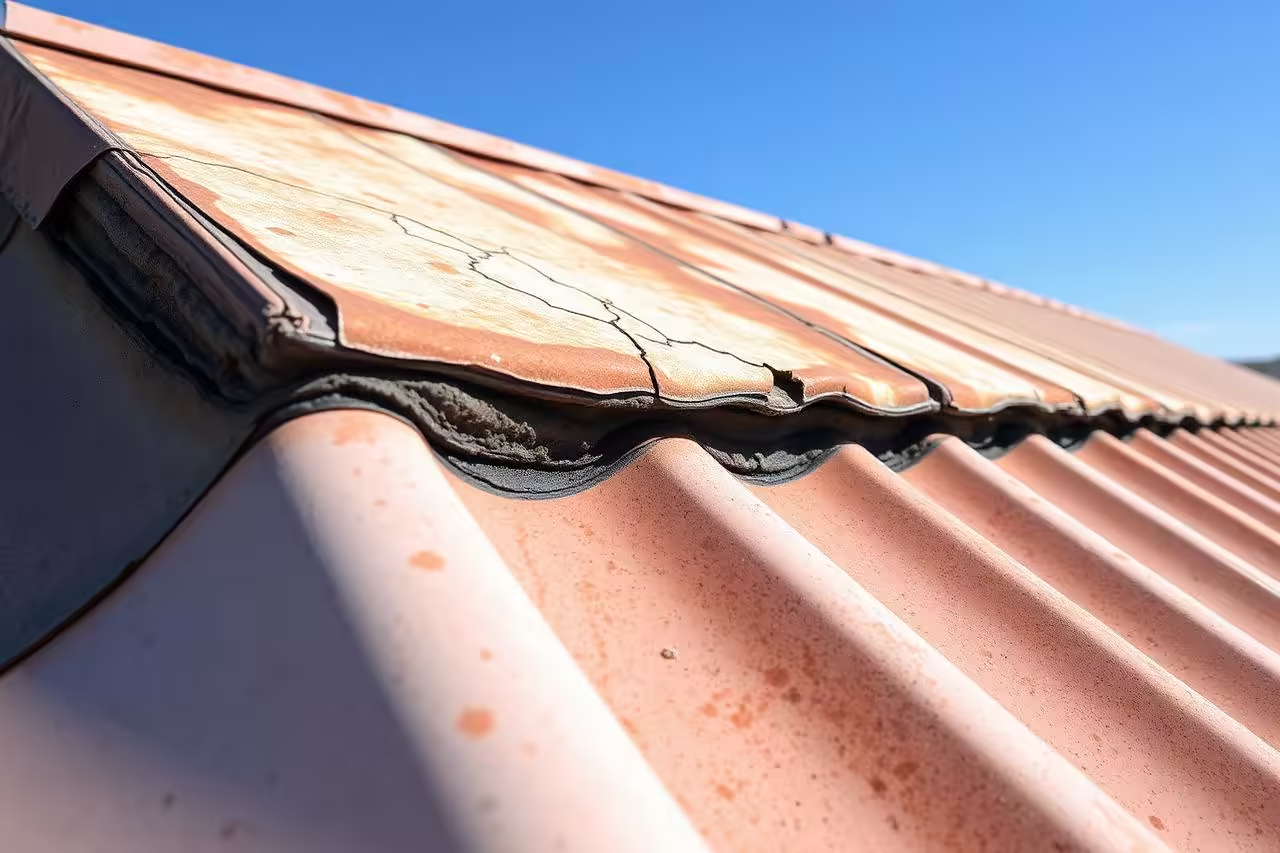
The water bead test works across nearly every membrane on this list. Place a few drops of water on the surface. If it beads up, the coating is still working. If it darkens or absorbs within a few minutes, it is time to recoat.
How It Works
Three different products get called a roof coating. They do very different jobs, and matching the type to the membrane is most of the decision.
Elastomeric Coatings
These form a flexible, waterproof membrane over the roof surface that expands and contracts with temperature swings. This is the right choice for the majority of commercial roof systems on this list, especially where ponding water is a concern.
Silicone Coatings
These resist UV degradation and ponding water exceptionally well, and hold up longer under direct Arizona sun than most alternatives. They are the standard choice for SPF roofing and a strong option for TPO and metal roof flashing.
Flashing And Seam Sealants
A separate category entirely. Even membranes that rarely need a full coating, like TPO and EPDM, almost always have flashing and penetration seals that do.
Do This, Never That
Do
- Test with the water bead method before assuming a recoat schedule
- Match coating type to roof system, never guess
- Recoat flashing and seams even on membranes that do not need full-field coating
Don't
- Use a topical film coating on tile roofing or other breathable systems that need airflow underneath
- Skip recoating because a roof still looks fine, since many coating failures are not visible until a leak occurs
- Assume all commercial roof systems follow the same recoat schedule
Commercial Roof Coating Guides Questions
Full Care Guides
Every material and grout guide in the Resource Center, with the complete step by step care detail behind the summaries above.
Ceramic Tile Care
Glazed face, porous grout: the routine that keeps it looking new.
Read GuidePorcelain Tile Care
Near-zero absorption, but grout and polished faces still need care.
Read GuideTravertine Care
Filled vs unfilled, reseal intervals, and local pool deck wear.
Read GuideMarble Care
Why etching, not staining, is marble's real problem.
Read GuideGranite Care
The water droplet test and slab-by-slab reseal frequency.
Read GuideSlate Care
Cleft texture, delamination, and breathable sealers only.
Read GuideLimestone Care
Soft, acid sensitive, and dependent on a working sealer.
Read GuideSaltillo Tile Care
Unfired clay that treats sealer as a requirement, not an option.
Read GuideQuarry Tile Care
Dense unglazed clay tile and the grout that fails around it.
Read GuideTerrazzo Restoration
Composite stone, wax buildup, and true restoration polishing.
Read GuidePool Deck Stone Care
Chlorine, UV, and the 9 to 12 month reseal window.
Read GuideGrout Cleaning & Sealing
Porosity, reseal cycles, and when grout has failed beyond cleaning.
Read GuideShower Restoration
Moisture exposure, restoration vs retile, and project phases.
Read Guide
Related Pages
Roof Leak And Damage Diagnosis
A lookup across leak type and roof system, including how to tell interior condensation from an actual membrane breach before scheduling a repair.
Learn moreMaintenance Programs
Every quarterly, semi-annual, and annual inspection interval on this site, consolidated into one filterable maintenance program schedule.
Learn moreTPO Roofing Systems
Overview content for this guide is being finalized by our roofing team and will replace this text.
Learn moreReady When You Are
Protect Your Roof.
Get a Free Inspection.
Commercial roof installation, repair, and maintenance across the Phoenix metro and Tucson, locally owned and operated.
- Mon–Sat8 AM – 7 PM
- SundayClosed
- LicensedROC #359782
Phoenix Metro · Tucson
Free Roof Inspections For Owners & General Contractors