
Complete Guide · Updated For Arizona Commercial Roofs
TPO Roofing Systems
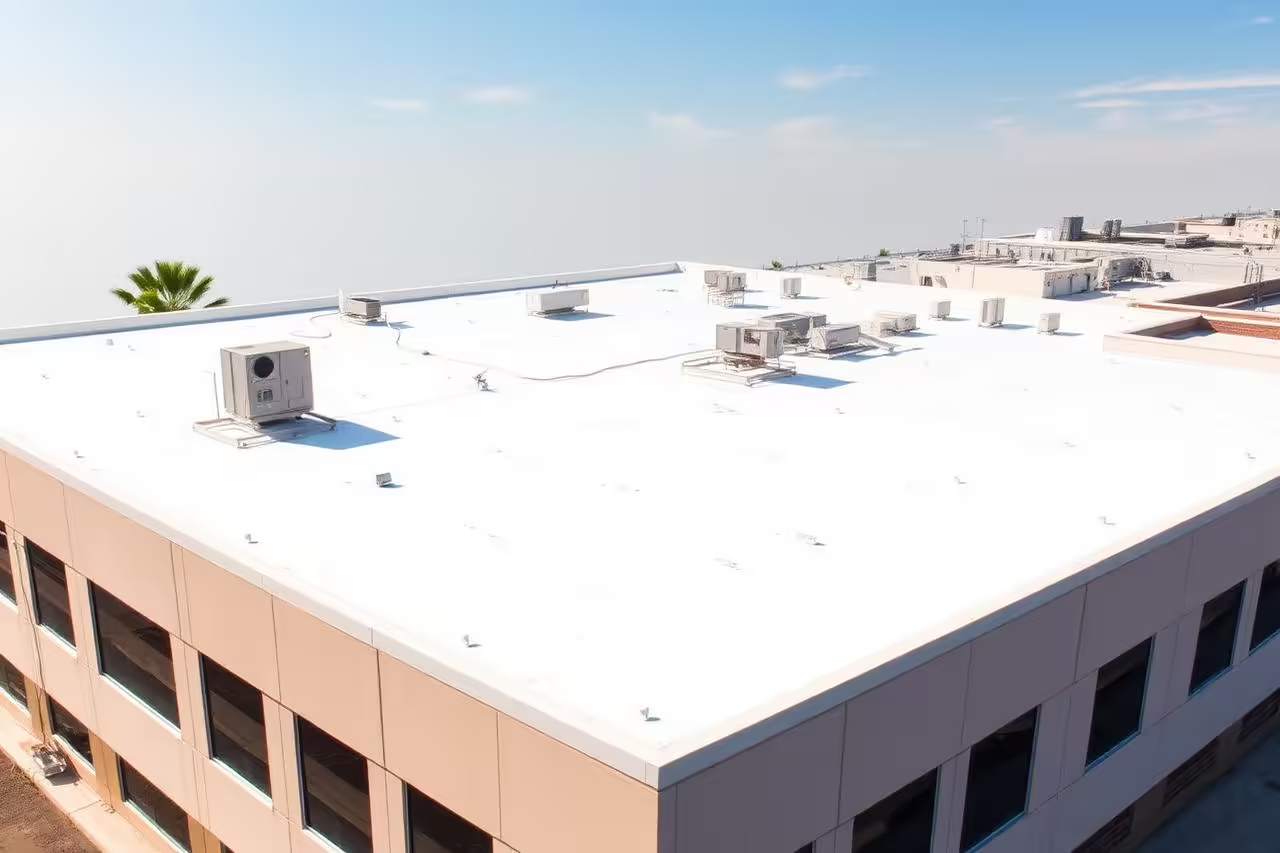
TPO single-ply membrane is one of the most widely specified low-slope roofing systems on Phoenix metro and Tucson commercial buildings, prized for its reflective white surface and heat-welded seams, but Arizona's UV intensity and extreme heat cycling put real stress on those seams and attachment points over time.

What TPO Roofing Actually Is
TPO (thermoplastic polyolefin) is a single-ply reflective membrane roofing system whose seams are heat-welded together, and those welded seams are the detail that determines whether the system stays watertight.
TPO sheets are manufactured with a reinforced scrim core and installed in wide rolls, then joined at overlaps using hot-air welding equipment that fuses the top and bottom sheets into a single continuous seam rather than relying on adhesive or tape alone.
In the Phoenix metro and Tucson markets, the two factors that most shorten a TPO roof's service life are incomplete or degraded seam welds and physical damage from foot traffic or rooftop equipment servicing. Both are catchable during routine inspection, and both are addressable with professional seam repair or a restorative coating before minor issues become active leaks.
Reflective White Surface
The white membrane reflects solar heat rather than absorbing it, which lowers roof surface temperature and reduces cooling load on the building below.
Welded, Not Glued Seams
Properly heat-welded seams create a continuous fused joint. A weak or incomplete weld is the most common point of water entry on TPO systems.
Attachment Method Matters
Mechanically attached, fully adhered, and ballasted TPO systems each carry different maintenance and wind-uplift considerations.
Extended Service Life
A TPO roof with a documented inspection and seam maintenance program can reach and exceed its expected service life even under Arizona heat exposure.
Know Which Attachment Method You Have
Maintenance priorities shift with how the membrane is secured to the deck. Identify the attachment method before scheduling any repair or coating work.
Membrane secured with fasteners and plates under overlapping seams
Inspect fastener rows and seam welds each cycle, watch for backing out
Wind uplift stress concentrated at fastener lines and seams
Membrane bonded directly to insulation with adhesive across the full field
Inspect for delamination or bubbling where adhesive bond has weakened
Bond failure at parapets, curbs, and other edge details
Loose-laid membrane held down by stone ballast or paver systems
Keep ballast evenly distributed, inspect membrane beneath during service visits
Ballast displacement exposing membrane to wind and UV
Membrane secured with concealed plates welded from beneath, no exposed seams over fasteners
Standard field and seam inspection, check plate spacing near penetrations
Isolated weld failures where the induction weld did not fully bond
Catch It Early
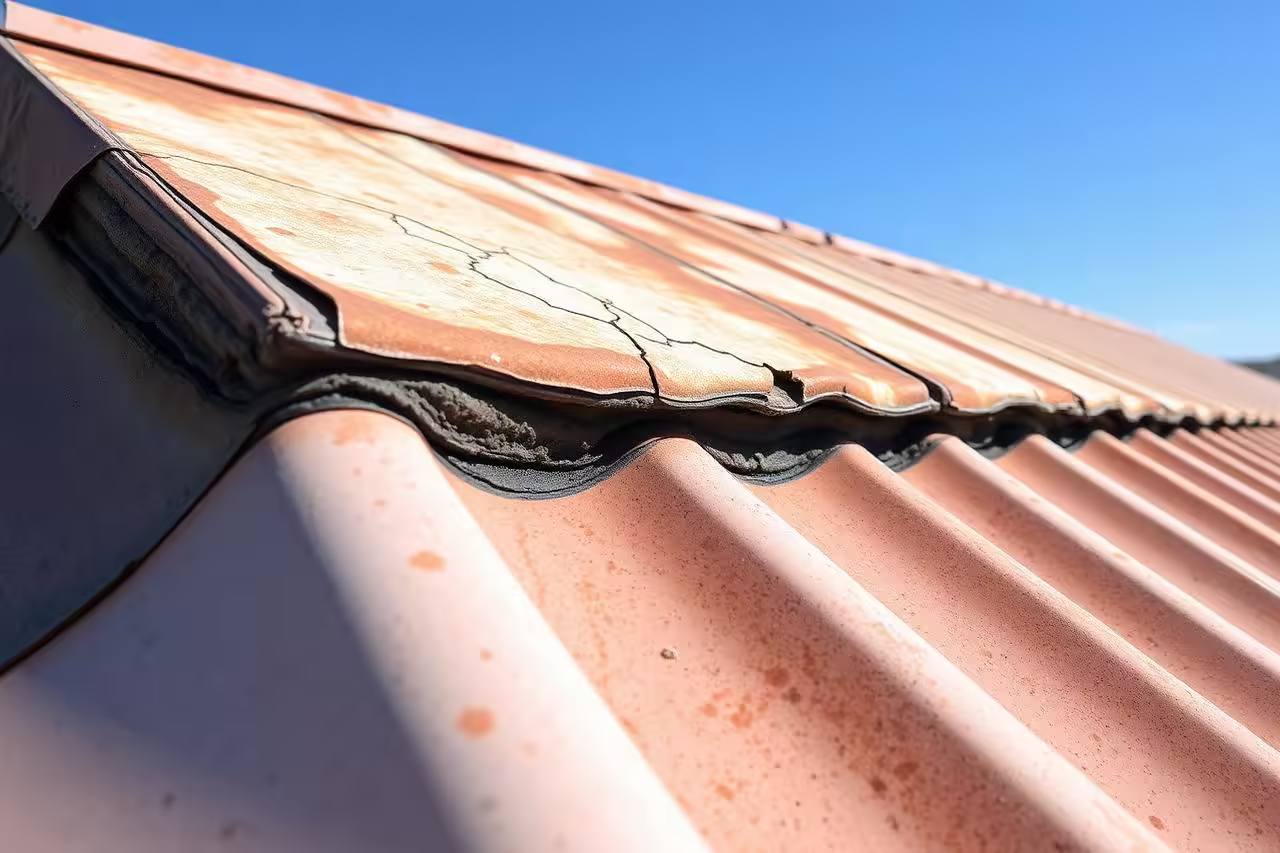
TPO rarely fails without warning. These are the signals that a seam, a flashing detail, or the membrane itself is losing ground.
A Routine You Can Actually Keep
Three cadences cover most TPO roofs on commercial buildings. Keep the seasonal inspection habit and the annual repair list stays short.
- Visual walk of the field, seams, and flashing details
- Clear drains and scuppers of debris
- Photograph and log any new seam lifting or punctures
- Inspect all penetrations, curbs, and parapet flashing
- Check for standing water beyond the 48 hour window
- Professional roof inspection with a written condition report
- Seam and flashing repairs identified during the walk
- Evaluate whether a restorative coating extends remaining service life
The Deep Clean Process
This is the sequence a commercial roofing crew follows on a scheduled maintenance visit, scaled for a facility manager to understand what is being inspected and why.
- 01
Clear The Field Of Debris
Remove loose debris and standing dirt so seams, punctures, and discoloration are actually visible during inspection.
- 02
Walk Every Seam
Check each heat-welded seam for lifting, gaps, or separation, not just the field of the membrane.
- 03
Inspect All Flashing Details
Parapets, curbs, and penetrations fail long before the membrane field does. Every detail gets checked, not sampled.
- 04
Verify Drainage Paths
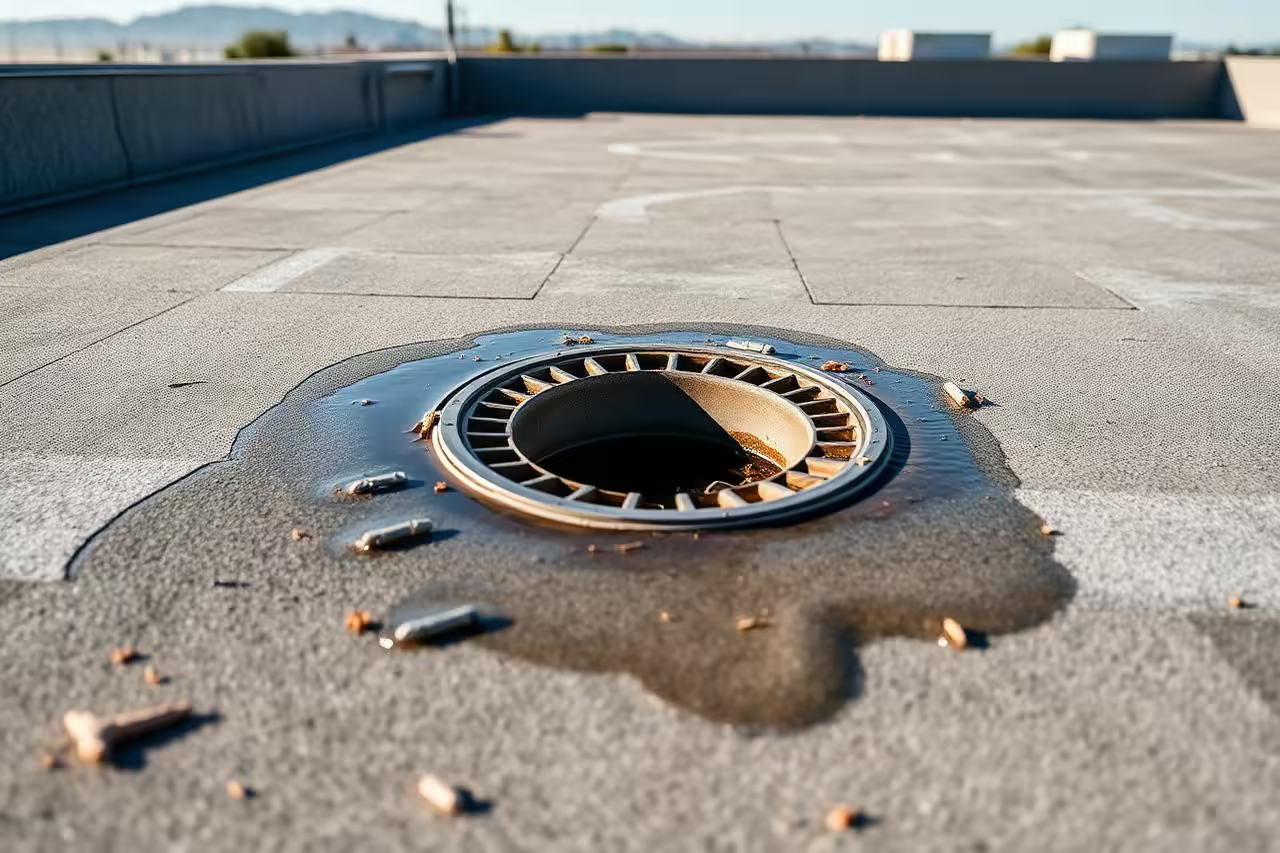
Confirm drains, scuppers, and crickets are clear and directing water off the roof rather than pooling against a seam.
- 05
Document Findings
Photograph and log every issue found so repair priorities are clear and the roof's condition is tracked over time.
- 06
Schedule Repairs By Priority
Active leaks and open seams get addressed first, cosmetic surface discoloration gets scheduled next.
Heat-Welded Seams Are Where TPO Fails
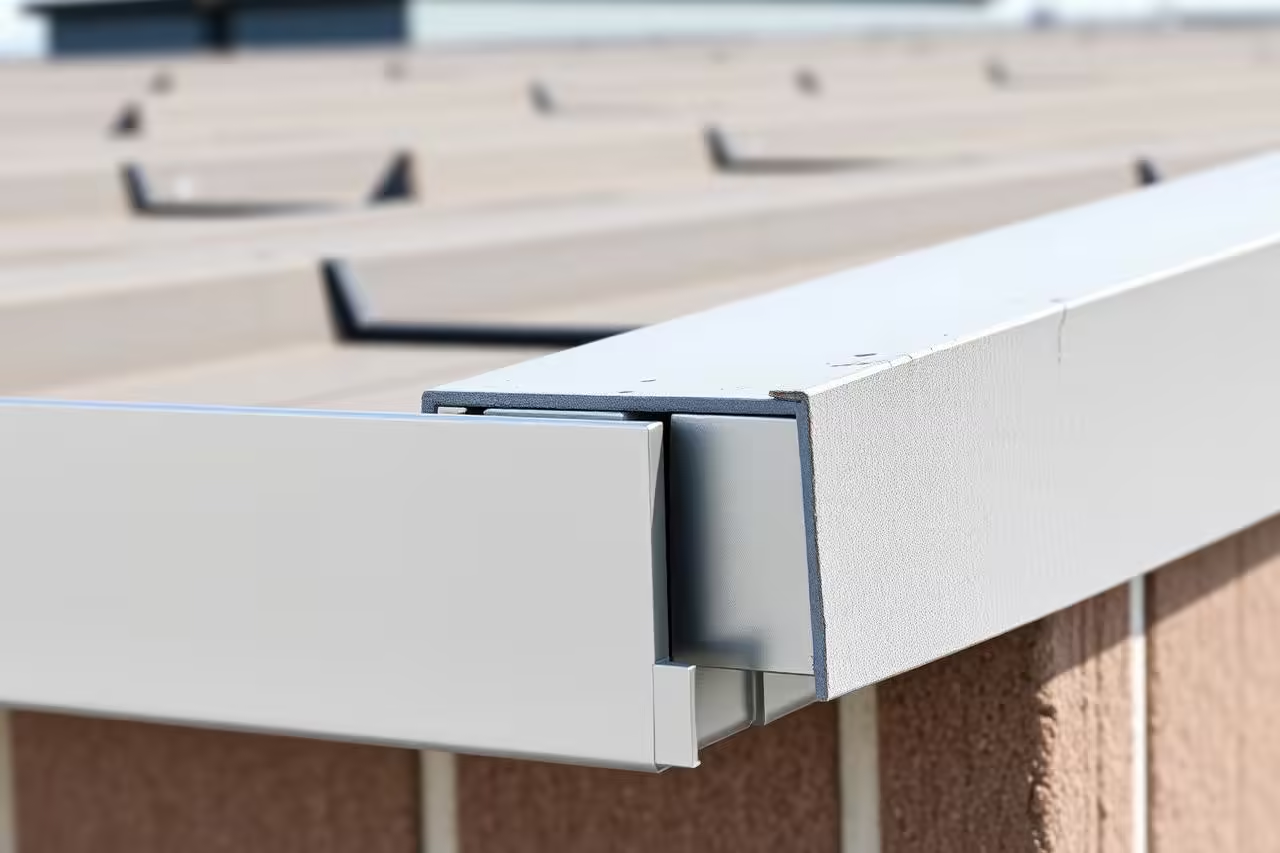
The membrane field itself is durable. The heat-welded seams between sheets are where nearly every TPO leak we diagnose actually starts.
Daily heat cycling in the Phoenix metro area expands and contracts the membrane constantly, and that movement puts continuous stress on every seam. A weld that looked sound at installation can open enough to leak after repeated summers of expansion and contraction, especially near parapets and rooftop equipment where foot traffic concentrates.
- Inspect seams on every scheduled visit, not just after a storm
- Address lifted or separated welds before monsoon season
- Reinforce high-stress seams near parapets, curbs, and equipment pads
- Track seam condition over time rather than only reacting to leaks
Failure & Repair Chart
Match the surface issue to the response. Cosmetic wear and structural failure require very different action.
Seam Lifting Or Weld Separation
Professional re-weld of the affected seam length, not a surface patch
Punctures From Foot Traffic Or Debris
Patch repair matched to the existing membrane thickness and reinforcement
Surface Discoloration Or Chalking
Monitor and plan a restorative coating before UV degradation compromises the membrane surface
Membrane Shrinkage At Flashing
Re-secure and reflash the affected detail before the gap widens further
Standing Water Beyond 48 Hours
Drainage assessment. Tapered insulation or added drainage may be needed, not just a surface patch
Ballast Displacement (Ballasted Systems)
Redistribute ballast and inspect the exposed membrane beneath for UV or wind damage
Do This, Never That
Do
- Schedule seasonal inspections, especially before and after monsoon season
- Keep drains, scuppers, and gutters clear of debris
- Address seam lifting and punctures promptly, before they become active leaks
- Log roof condition over time with dated photos
- Restrict rooftop foot traffic to designated walk pads, especially near HVAC service paths
Don't
- Ignore small punctures because the roof is not actively leaking yet
- Let standing water sit past 48 hours without investigating the cause
- Allow unrelated trade work or HVAC contractors on the roof without protecting the membrane
- Delay flashing repairs at penetrations and parapets
- Assume surface discoloration is only cosmetic
What Actually Gets Sealed
A properly applied restorative coating can extend the service life of a sound TPO roof and renew reflectivity, which helps maintain lower surface temperature and reduced thermal stress on seams.
The Full Membrane Field
A coating is applied across the entire roof surface once seams and flashing repairs are complete, not layered over an active leak.
Seams And Details First
Every seam and flashing detail is inspected and repaired before a coating goes down, since coating over a failed seam only hides the problem.
Reflective Benefit
A refreshed reflective coating restores solar reflectance lost to years of UV exposure, lowering surface temperature and reducing daily seam stress in direct Arizona sun.
When To Call A Pro
Homeowner care handles maintenance. These four situations are restoration work, and waiting on them almost always raises the cost.
Recurring Leaks In The Same Area
A leak that returns after a spot repair usually means the underlying insulation or deck has already absorbed moisture and needs assessment.
Widespread Seam Separation
Seam issues across large sections of the roof point to a systemic weld or attachment problem, not an isolated repair.
Soft Or Spongy Deck Areas
A soft feel underfoot signals wet insulation or deck damage that requires investigation before it spreads further.
No Documented Inspection In Over A Year
A roof without a recent condition report is a roof with unknown risk. A free inspection establishes the baseline before scheduling any work.
Want A Read On Your Roof?
Free assessment across the Phoenix metro and Tucson.
TPO Roofing Systems Questions
Related Pages
EPDM Roofing Systems
Overview content for this guide is being finalized by our roofing team and will replace this text.
Learn moreModified Bitumen Roofing Systems
Overview content for this guide is being finalized by our roofing team and will replace this text.
Learn moreCommercial Roof Leak Diagnosis
Roof leaks rarely show up directly above the stain on the ceiling. How we trace a leak to its actual source, and when a repair is enough versus when the membrane has failed beyond a patch.
Learn moreReady When You Are
Protect Your Roof.
Get a Free Inspection.
Commercial roof installation, repair, and maintenance across the Phoenix metro and Tucson, locally owned and operated.
- Mon–Sat8 AM – 7 PM
- SundayClosed
- LicensedROC #359782
Phoenix Metro · Tucson
Free Roof Inspections For Owners & General Contractors