
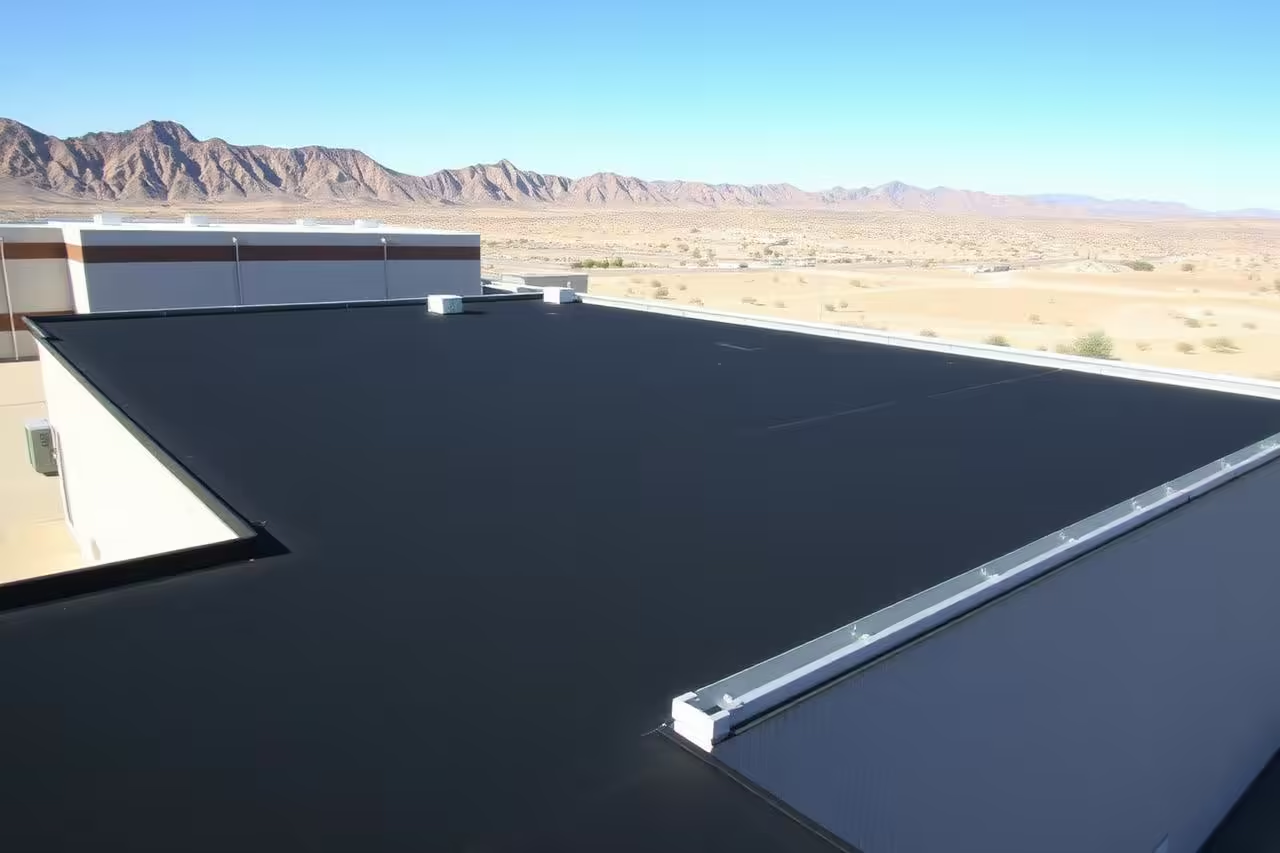
Complete Guide · Updated For Arizona Commercial Roofs
Rooftop Equipment And Penetrations
Every rooftop unit, vent, and conduit run is a hole in the roof system. Arizona heat, UV exposure, and monsoon wind-driven rain age the flashing at these points roughly twice as fast as the surrounding membrane field.

Why Penetrations Are Their Own Category
Rooftop penetration care is less about the roof membrane and more about everything mounted through it. HVAC units, vents, conduit, and satellite mounts all interrupt the waterproofing layer on a Phoenix metro commercial building.
The equipment itself is familiar, most commonly HVAC condensers, exhaust vents, plumbing stacks, and curb-mounted mechanical units. What changes is how each penetration is flashed and how much attention that flashing needs over time.
This guide addresses the shared challenges of rooftop penetrations specifically, with detail on each type, so a facility manager understands where a leak is most likely to originate before it reaches the building interior.
Equipment Adds Load And Access Traffic
Technicians walking to and around rooftop units wear the membrane faster near curbs and access paths.
UV And Heat Exposure
Full Arizona sun degrades flashing sealant far faster than membrane in the open field.
Inspect Every 6 To 12 Months
Noticeably more frequent around penetrations than the open membrane field would otherwise need.
Flashing Integrity Is Structural
A sealed penetration is a building envelope requirement, not an aesthetic preference.
Know Which Penetration Type You Have
The roof membrane is shared, the penetration is not. Each equipment type has its own flashing detail and inspection point underneath the same sun and monsoon exposure.
Most common rooftop equipment, mounted on a raised curb
Frequent flashing inspection due to sun exposure and service traffic
Curb flashing separation and condensate line drainage
Small pipe penetrations with boot or flange flashing
Boot flashing checked for cracking, sealed at the collar
Rubber boot flashing degrading in direct sun over time
Low-profile runs crossing the membrane to rooftop equipment
Pitch pockets or boots checked for cracking at every run
Pitch pocket sealant drying out and shrinking
Framed openings with curb-mounted glazing or access hatch
Perimeter flashing and gasket condition checked regularly
Seal failure at the curb-to-membrane transition
Catch It Early
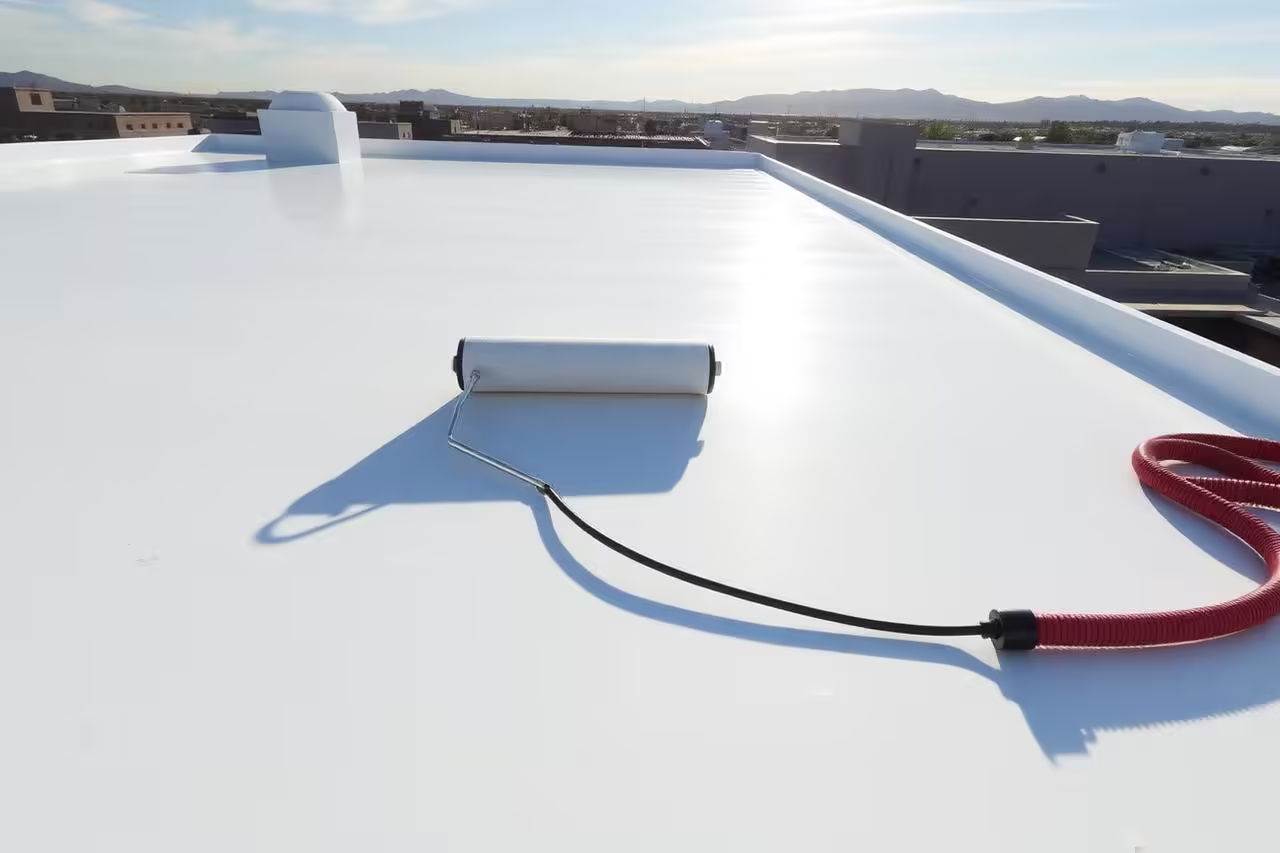
A penetration warns you in ways the open membrane field never does. Flashing changes are the ones to take seriously.
A Routine You Can Actually Keep
Walk the equipment often, watch the sun-exposed flashing, and reseal on a shorter cycle than the open field.
- Visual walk checking flashing, boots, and pitch pockets around every unit
- Clear debris that has collected at curb bases before it traps moisture
- Check condensate line routing and drainage near HVAC units
- Spot treat any early sealant cracking
- Reseal flashing with a product rated for UV and thermal cycling
- Plan on more frequent resealing than the open membrane field would need
The Deep Clean Process
Five steps, in order. Full assessment before resealing is the step people skip and regret.
- 01
Clear The Area Around Each Penetration
Remove debris and standing residue before inspecting so the flashing condition is visible, not hidden.
- 02
Inspect Every Flashing Detail
Check curbs, boots, and pitch pockets individually rather than assessing the roof as a single surface.
- 03
Check Equipment Mounting And Vibration Points
Vibration from rooftop units can work flashing loose over time even when the seal looked sound at install.
- 04
Confirm Drainage Is Not Blocked
Equipment placed without accounting for drainage can dam water directly against its own flashing.
- 05
Reseal Or Repair As Needed Once Assessed
Trapped moisture under a fresh sealant coat causes failure that has to be redone, so assess fully before sealing.
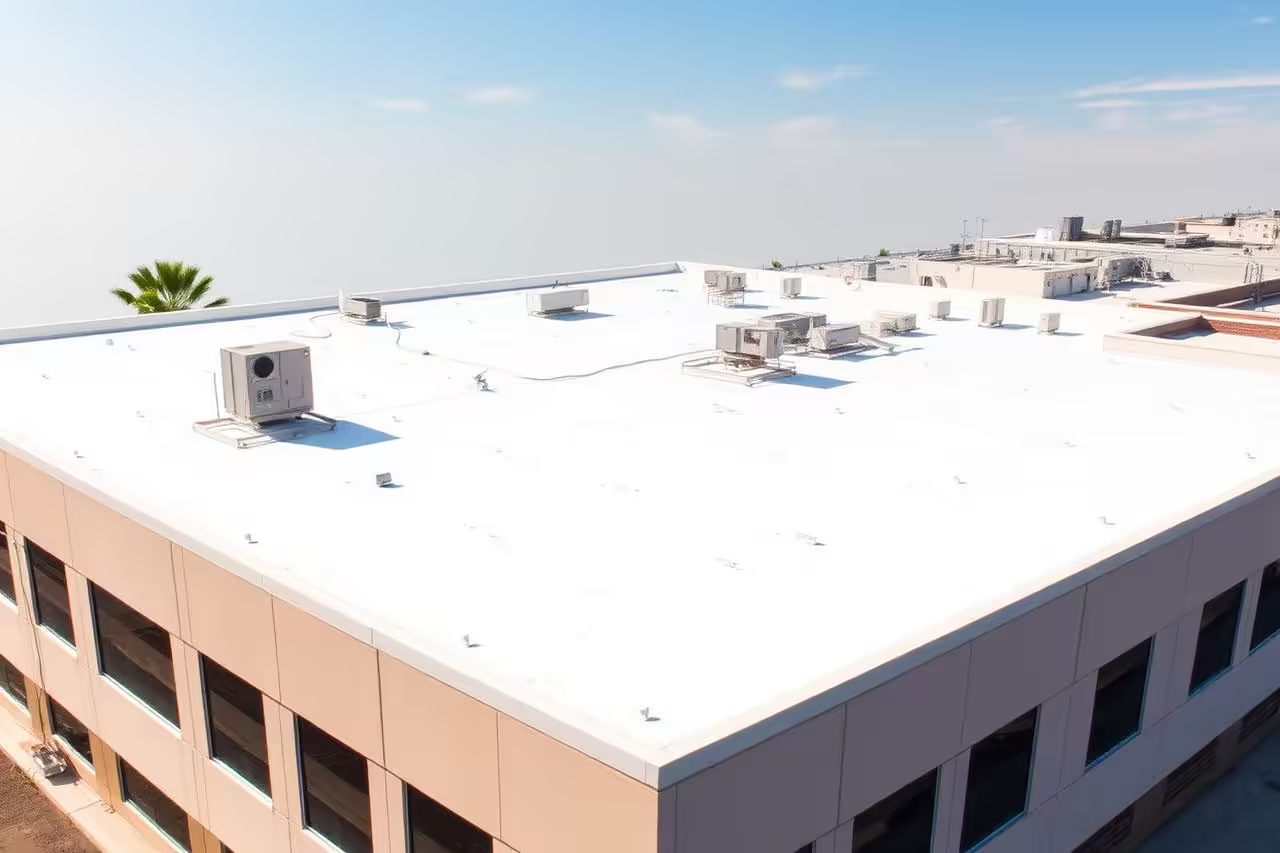
Sun And Heat Age Penetration Flashing Twice As Fast
Sun and heat age flashing sealant around rooftop penetrations roughly twice as fast as the membrane in the open field.
That is the single biggest reason rooftop equipment needs a shorter reseal cycle than the rest of the roof. Treating penetration flashing the same as the open field is how leaks develop at the equipment first.
- Use a sealant rated for UV and thermal exposure at every flashing detail
- Plan a six to twelve month inspection cycle rather than a multi-year one
- Watch sun-exposed curbs, which fail before shaded penetrations
- Reseal before a leak appears, not after
Failure & Repair Chart
Penetration-related issues have their own sources. Equipment servicing and pooling water account for most of what shows up.
Rust Streaking Near A Curb
Clean and treat the spot, evaluate the curb flashing for replacement if corrosion has spread
Sealant Cracking At A Pitch Pocket
Remove old sealant fully and reapply a compatible product rather than layering over it
Condensate Staining Near An HVAC Unit
Reroute or clear the condensate line, then treat the affected membrane area
Debris Buildup At A Curb Base
Clear promptly, since trapped debris holds moisture against the flashing
Do This, Never That
Do
- Reseal flashing on a shorter cycle than the open membrane
- Inspect every penetration during each scheduled visit
- Prioritize proper drainage around all rooftop equipment
- Treat cracked sealant before it becomes an active leak
Don't
- Assume rooftop equipment flashing lasts as long as the open membrane field
- Let debris accumulate around curb bases before addressing it
- Add new equipment without accounting for the existing drainage path
- Reseal a penetration that has not been fully assessed for underlying moisture
What Actually Gets Sealed
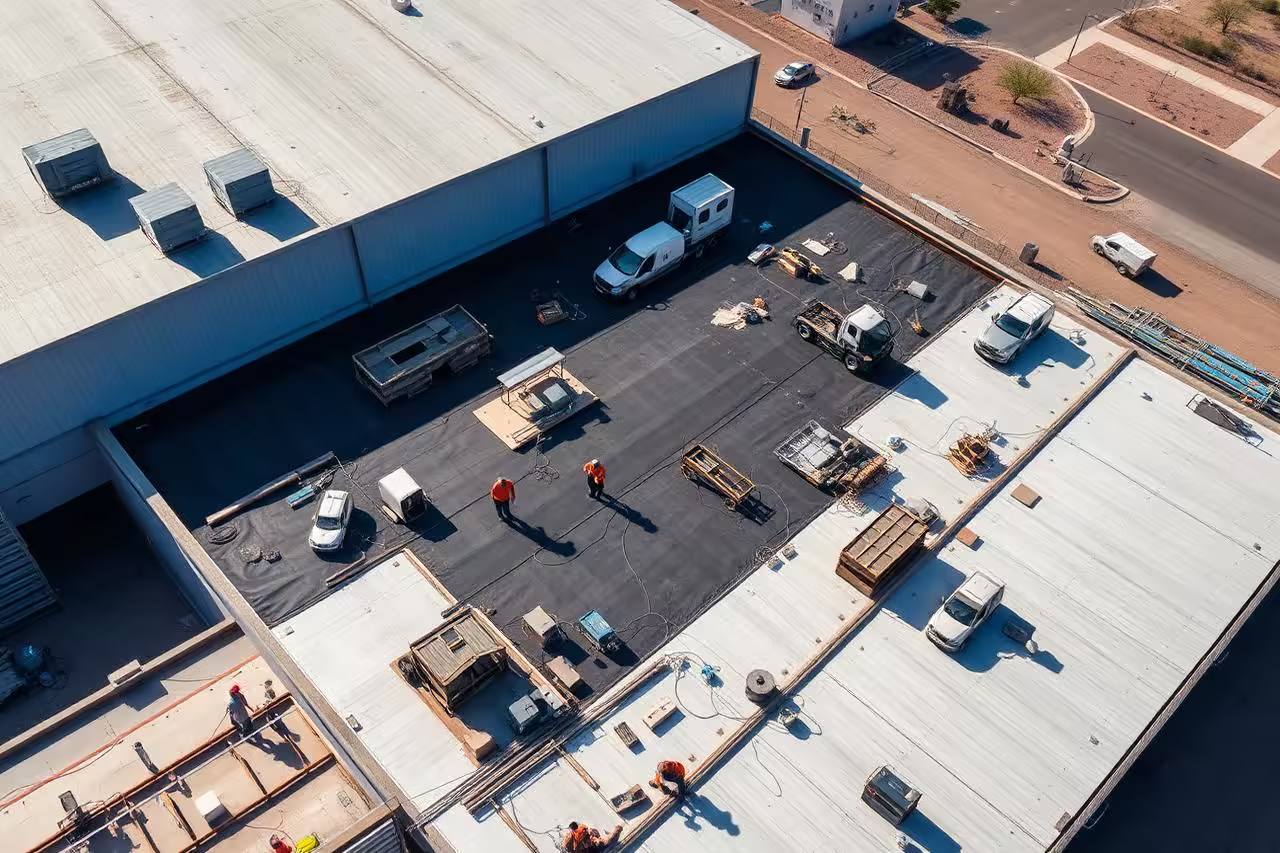
Every penetration takes sealant, and the product rating matters as much as the coverage in this environment.
Every Penetration Point
Each curb, boot, and pitch pocket takes a sealant rated for UV and heat, since a standard product breaks down faster here.
Curbs And Equipment Bases
Equipment mounting zones see the most service traffic and get the closest attention at each inspection.
Conduit And Cable Runs
Runs seal alongside the penetrations they cross, and any sagging gets corrected before the sealant goes down.
When To Call A Pro
Homeowner care handles maintenance. These four situations are restoration work, and waiting on them almost always raises the cost.
Persistent Leaks After Resealing
A leak that does not resolve after resealing points to a deeper flashing or curb issue.
Widespread Flashing Separation
Flashing lifting across multiple penetrations indicates a systemic detailing problem, not isolated wear.
Corrosion At A Curb Base
Rust that has moved past the surface into the curb structure needs assessment before it compromises the mount.
No Inspection In Over A Year
In full sun exposure, penetrations past twelve months without inspection should be assessed rather than assumed sound.
Want A Read On Your Roof?
Free assessment across the Phoenix metro and Tucson.
Rooftop Equipment And Penetrations Questions

Related Pages
Travertine Care
The most common Phoenix metro and Tucson pool deck stone, in full detail.
Learn moreRoof Coatings & Sealing
When a coating actually extends service life, which systems accept one, and recoat intervals.
Learn moreCommercial Roof Leak Diagnosis
Joints and grout around deck stone: cleaning, sealing, and repair.
Learn moreReady When You Are
Protect Your Roof.
Get a Free Inspection.
Commercial roof installation, repair, and maintenance across the Phoenix metro and Tucson, locally owned and operated.
- Mon–Sat8 AM – 7 PM
- SundayClosed
- LicensedROC #359782
Phoenix Metro · Tucson
Free Roof Inspections For Owners & General Contractors