
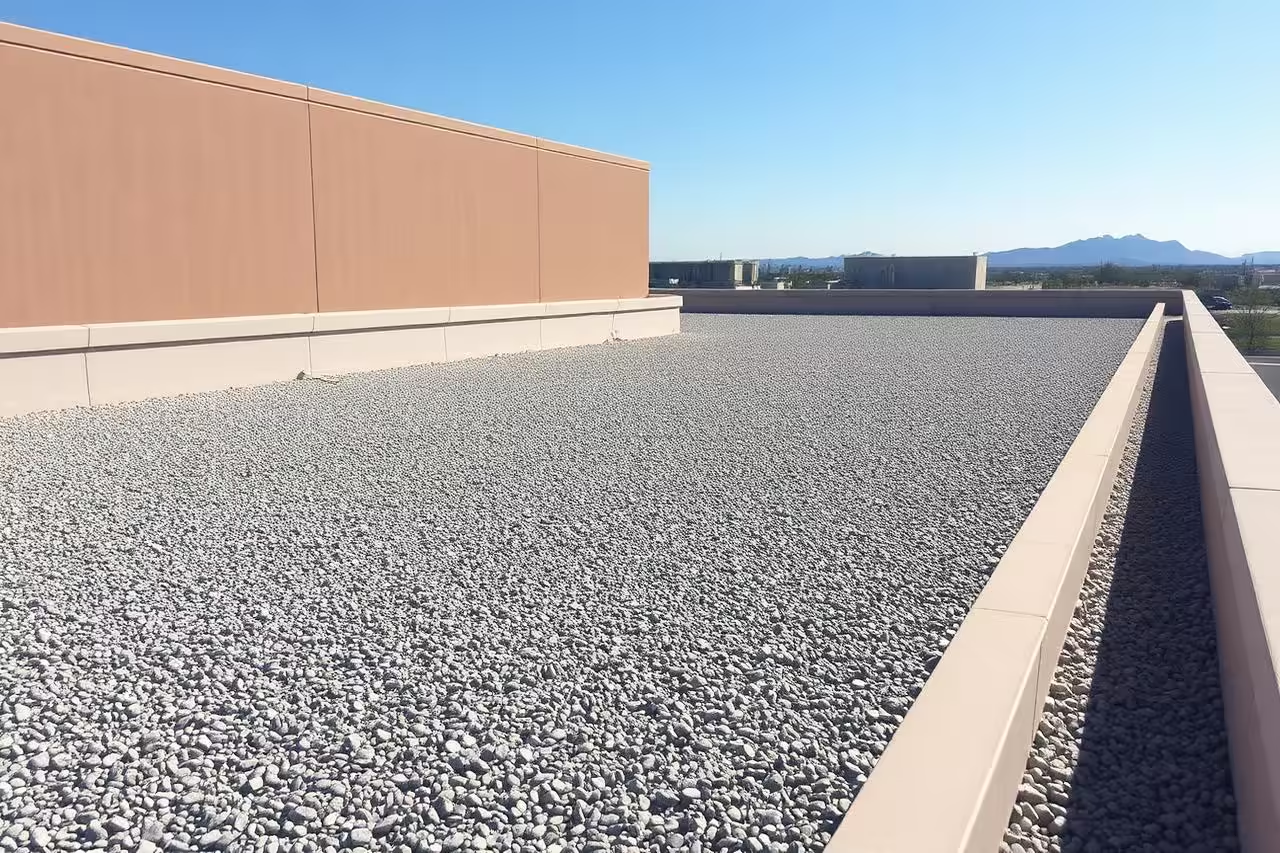
Complete Guide · Updated For Arizona Commercial Roofs
Built-Up Roofing (BUR) Systems
Built-up roofing is the oldest low-slope system still in wide commercial use, layering plies of asphalt and reinforcement into one thick, durable membrane. It rewards a documented maintenance plan and punishes a missed inspection faster than most newer systems.

What Built-Up Roofing Actually Is
A built-up roof is constructed from multiple alternating layers of asphalt (or coal tar) and reinforcing felt or fabric, finished with a gravel, mineral cap sheet, or coating surface.
That layered construction is the whole story: more plies generally mean more redundancy against water intrusion, which is why BUR has remained a trusted system for flat and low-slope commercial roofs for well over a century.
In the Phoenix metro area, the two things that age a built-up roof fastest are UV breakdown of any exposed asphalt and blistering from trapped moisture between plies. Both are manageable with routine inspection, and both are addressable with targeted repair or a restorative coating before the damage spreads.
Multi-Ply Redundancy
Multiple layers of asphalt and felt give BUR inherent redundancy, but every ply still depends on the surface above it staying intact.
Gravel Or Smooth Surface
Gravel ballast protects the plies below from UV and foot traffic. Smooth or coated surfaces need their own protective layer instead.
Arizona Heat Factor
Intense sun accelerates asphalt oxidation on any exposed or thin-coated area faster than in milder climates.
Long Service Life When Maintained
A well maintained BUR system with documented inspections regularly serves buildings for decades.
Know Which BUR Surface You Have
The surface layer decides how the roof ages and what maintenance it needs. Identify it before scheduling repair or coating work.
Loose stone ballast over the membrane, traditional appearance
Maintain even gravel coverage, replenish bare spots
Bare patches exposing asphalt to direct UV
Mineral-surfaced cap sheet, no loose ballast
Protective coating recommended on a scheduled cycle
Surface cracking and alligatoring from UV exposure
Reflective elastomeric or asphaltic coating over the membrane
Recoat on schedule before the coating thins out
Coating wear in high-traffic and ponding areas
BUR base plies finished with a modified bitumen cap sheet
Treat the cap sheet seams as the primary inspection point
Seam separation at the modified bitumen top layer

Catch It Early
BUR roofs age gradually and give clear signals along the way. These are the ones worth acting on before a repair becomes a replacement.
A Routine You Can Actually Keep
Three cadences cover most built-up roofs. Keep the seasonal walk consistent and the annual repair scope stays manageable.
- Visual walk of the surface, checking gravel coverage or coating condition
- Clear drains and scuppers of debris and gravel migration
- Log any new blistering, cracking, or bare spots
- Inspect flashing at every parapet, curb, and penetration
- Confirm drainage is clearing standing water within 48 hours
- Professional inspection with a written condition report
- Repair or replenish gravel coverage as needed
- Evaluate coating or recoating needs based on surface wear
The Deep Clean Process
This is the sequence a commercial roofing crew follows on a scheduled maintenance visit, so a property manager understands what is being checked and why.
- 01
Clear Debris And Loose Gravel
Remove debris and check for gravel migration toward drains, which both obscures problems and clogs drainage paths.
- 02
Inspect The Surface Layer
Check gravel coverage or coating condition across the entire field, not just the areas visible from the access point.
- 03
Check Every Flashing Detail
Parapets, curbs, and penetrations are where BUR roofs most often start leaking, well before the field membrane fails.
- 04
Verify Drainage Paths
Confirm drains and scuppers are clear and that water is not pooling against a seam, curb, or low spot.
- 05
Document Findings
Photograph and log every issue so the roof's condition is tracked and repair priorities are clear.
- 06
Schedule Repairs By Priority
Active leaks and saturated insulation areas get addressed first, cosmetic gravel loss gets scheduled next.
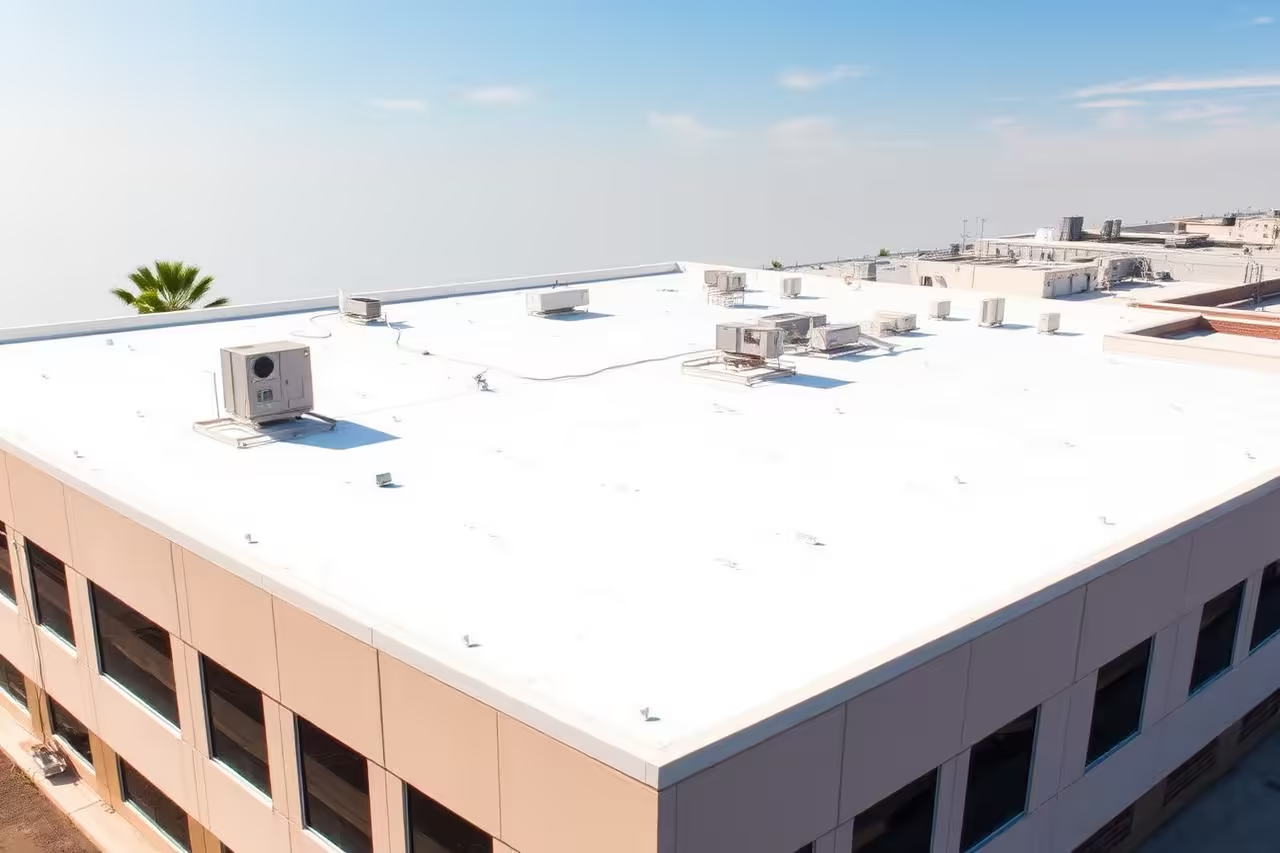
Trapped Moisture Is Where BUR Fails
The layered plies of a built-up roof are durable individually, but once moisture gets trapped between them, it has nowhere to escape and the damage spreads from the inside out.
That is why blistering deserves attention the moment it is spotted rather than being written off as cosmetic. A blister today is often saturated insulation tomorrow, and saturated insulation is a far larger repair than a surface patch.
- Investigate every blister rather than assuming it is only cosmetic
- Replenish gravel or recoat before asphalt is left exposed to UV
- Address flashing failures before monsoon season, not after
- Track surface condition over time instead of only reacting to leaks
Failure & Repair Chart
Match the surface issue to the right response. Ballast wear and structural moisture problems require very different action.
Bare Gravel Spots
Replenish ballast or apply a protective coating before exposed asphalt accelerates UV aging
Blistering Or Bubbling
Professional assessment to determine if the area needs to be cut, dried, and patched
Alligator Cracking
Localized repair for isolated cracking, full recoat or overlay if the pattern is widespread
Standing Water Beyond 48 Hours
Drainage assessment. Tapered insulation or added drains may be needed rather than a surface patch
Flashing Separation
Re-secure and reseal the detail promptly, since this is a common leak entry point
Punctures From Debris Or Foot Traffic
Patch repair matched to the existing ply construction
Do This, Never That
Do
- Schedule seasonal inspections, especially before and after monsoon season
- Keep drains and scuppers clear of debris and migrated gravel
- Investigate blistering promptly rather than monitoring it indefinitely
- Log roof condition over time with dated photos
- Restrict rooftop foot traffic to designated walk pads
Don't
- Assume gravel loss is only cosmetic
- Let standing water sit past 48 hours without investigating the cause
- Allow unrelated trade work on the roof without protecting the surface
- Delay flashing repairs at penetrations and parapets
- Wait for an active leak before scheduling an inspection
What Actually Gets Sealed
A properly applied protective coating extends the service life of a sound BUR roof and reduces surface temperature, lowering ongoing thermal stress on the plies below.
The Full Roof Surface
A coating is applied across the entire field once flashing repairs are complete, not layered over trapped moisture.
Flashing And Details First
Every flashing detail is repaired and reinforced before a coating goes down, since coating over a failed detail only hides the problem.
Reflective Benefit
A reflective coating lowers surface temperature in direct Arizona sun, reducing the daily heat cycling that stresses the roof.
When To Call A Pro
Homeowner care handles maintenance. These four situations are restoration work, and waiting on them almost always raises the cost.
Recurring Leaks In The Same Area
A leak that returns after a spot repair usually means the insulation or deck below has already absorbed moisture.
Widespread Blistering
Blistering across large sections points to trapped moisture throughout the system, not an isolated issue.
Soft Or Spongy Deck Areas
A soft feel underfoot signals saturated insulation or deck damage that requires investigation before it spreads.
No Documented Inspection In Over A Year
A roof without a recent condition report carries unknown risk. A free inspection establishes the baseline before scheduling work.
Want A Read On Your Roof?
Free assessment across the Phoenix metro and Tucson.
Built-Up Roofing (BUR) Systems Questions
Related Pages
Granite Care
The forgiving alternative: dense, heat resistant, and driven by the water droplet test.
Learn moreRoof Coatings & Sealing
When a coating actually extends service life, which systems accept one, and recoat intervals.
Learn moreStain Removal Guides
Poultices, enzymatic treatments, and what to never put on a soft stone.
Learn moreReady When You Are
Protect Your Roof.
Get a Free Inspection.
Commercial roof installation, repair, and maintenance across the Phoenix metro and Tucson, locally owned and operated.
- Mon–Sat8 AM – 7 PM
- SundayClosed
- LicensedROC #359782
Phoenix Metro · Tucson
Free Roof Inspections For Owners & General Contractors